
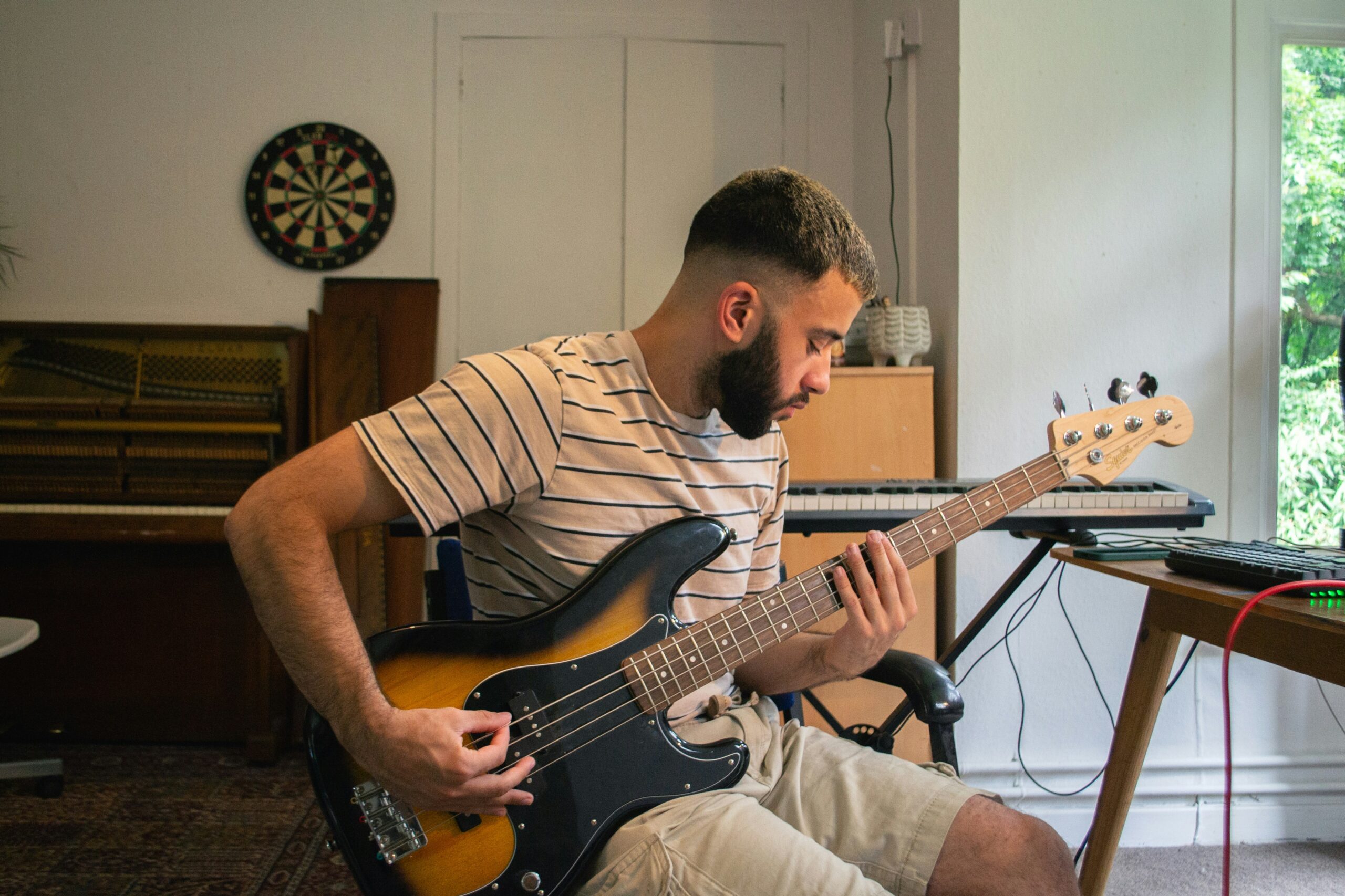
You found the perfect session guitarist. Their demos sound incredible. You send over your track with a quick message: “Looking for something bluesy, but modern. You know what I mean?”
Three days later, the stems come back. The tone is wrong. The energy doesn’t match. The licks are technically great but feel completely disconnected from your song’s vibe.
Now you’re stuck choosing between asking for expensive revisions or settling for something that’s “close enough.” All because the brief wasn’t clear.
If you’ve ever hired a session musician only to get back something that missed the mark, you’re not alone. The disconnect between what’s in your head and what comes back in the files is one of the most frustrating parts of remote collaboration. But here’s the thing: it’s almost never about the musician’s skill. It’s about the brief.
Session players can deliver magic when they understand what you want. But they can’t read your mind. A vague “make it groovy” or a single reference track without context leaves way too much room for interpretation. The result? Wasted time, wasted money, and a recording that doesn’t serve your song.
(If you’re a session musician looking to understand what clients need, this guide from BMI offers great perspective from the other side of the collaboration.)
In this post, we’ll break down exactly how to brief a session musician so they nail your vision on the first take—no guesswork, no revisions, just exactly what your track needs.
Why Bad Briefs Happen (And Why They Cost You)
Most producers and artists don’t set out to give unclear instructions. But when you’ve lived with a song for weeks or months, it’s easy to assume everyone else hears what you hear.
You know the pocket you want. You can feel the energy in your head. But the session player is hearing your track for the first time. They’re trying to interpret your vision through a two-sentence message and maybe a rough mix.
Here are the most common briefing mistakes that lead to disappointing results:
The “You’ll Know It When You Hear It” Approach
Sending just the track with minimal context and hoping the musician intuitively gets what you want. Sometimes this works if you’ve worked together before. Most of the time, it doesn’t.
The Reference Track With No Explanation
Sharing a Spotify link to a song you like without explaining what specifically you want them to pull from it. Are you referencing the tone? The rhythm? The dynamics? The vibe? All of it? Without clarification, the musician is left guessing.
The Over-Detailed Chart With No Feel Context
Providing a perfect chord chart and exact note-for-note parts without communicating the emotional energy or style nuance you’re after. Technical precision without musical context often leads to technically correct but emotionally flat performances.
The Assumption That “Similar Genre” Is Enough
Telling a drummer “it’s indie rock” as if that genre descriptor alone gives them everything they need. Indie rock can mean Arcade Fire or it can mean Bon Iver. Those are wildly different approaches.
The Last-Minute Panic Brief
Rushing to get files out without taking 15 minutes to organize your thoughts and materials. This usually means missing crucial details that come up later, requiring expensive revision rounds.
Each of these approaches leaves gaps that the session musician has to fill in themselves. And when they fill in those gaps differently than you imagined, you both end up frustrated.
The fix isn’t complicated. It just requires thinking through your brief before hitting send.
The 5 Elements Every Session Brief Needs
A great brief doesn’t need to be long. It needs to be complete. Here’s what to include every single time:
1. The Song Context (What’s the Story?)
Start with the big picture. What’s the song about? What emotional space does it live in? What’s the intended vibe?
This isn’t filler—it’s crucial context that shapes how a musician approaches their part. A drummer will play a heartbreak ballad differently than an empowerment anthem, even if the tempo is the same.
Include:
- Song title and genre
- Emotional tone (melancholic, triumphant, anxious, celebratory)
- Lyrical themes if relevant
- Where the song sits in your project (album opener vs. closing track changes the approach)
Example:
“This is ‘Echoes,’ an indie-folk ballad about processing a breakup. The vibe is introspective and intimate—more Phoebe Bridgers than Mumford and Sons. It’s the third track on the EP, following two upbeat songs, so it’s meant to be a moment where everything slows down and gets vulnerable.”
2. The Technical Specs (What You Need)
Now get into the practical details. What are you actually asking them to record?
Include:
- Tempo (BPM) and time signature
- Key and any key changes
- Song structure (verse/chorus/bridge breakdown with timings)
- File format preferences for their delivery
- Expected number of takes or variations
- Turnaround time
Example:
“120 BPM, 4/4 time, key of G major. Structure is Intro (0:00-0:15), Verse 1 (0:15-0:45), Chorus (0:45-1:05), Verse 2 (1:05-1:35), Chorus (1:35-1:55), Bridge (1:55-2:20), Final Chorus (2:20-2:50). Please deliver stems as 24-bit WAV files. Would love 2-3 takes if you have different ideas for approaches. Turnaround: 5 days.”
3. The Reference Tracks (Show, Don’t Just Tell)
References are essential, but only when you explain what you’re referencing.
Don’t just drop a Spotify link. Tell them specifically what element you want them to pay attention to.
Include:
- 2-3 reference tracks that match the energy/style
- Timestamps for specific moments you like
- Clear explanation of what you’re referencing (tone, rhythm, dynamics, production style)
- What you DON’T want from the reference
Example:
Reference 1: “The Night We Met” by Lord Huron (0:45-1:10) Listen to how the guitar is fingerpicked but still has forward momentum. That rhythmic drive without being aggressive is what I’m after. Not interested in the tone necessarily—just that rhythmic feel.
Reference 2: “Skinny Love” by Bon Iver (2:15-2:45) Note the restraint in the dynamics. The guitar could be louder but sits back in a way that serves the vocal. That level of dynamic control is what I’m looking for.
4. The Musical Direction (How Should It Feel?)
This is where you get to paint the picture of what you’re hearing in your head. Use descriptive language about feel, energy, and approach.
Include:
- Desired energy level (laid back, driving, tense, explosive)
- Dynamic range expectations
- Pocket/groove description (ahead of the beat, behind, locked in)
- Specific sections that need different approaches
- Creative freedom parameters (locked parts vs. room for interpretation)
Example:
“The verses should feel almost fragile—play behind the beat, lots of space, let notes breathe. When the chorus hits, I want you to lean into it more but still maintain the fingerpicking pattern. Don’t switch to strumming. The bridge (1:55-2:20) is where you can get more adventurous—maybe some hammer-ons or pull-offs, just keep it in the same tonal world. Final chorus, bring the energy back down to match verse 1.”
5. The Practical Assets (Everything They Actually Need)
Finally, make sure you’re sending all the files and materials they need to do the job.
Include:
- Your demo/guide track (highest quality file available)
- Backing track without the part you’re hiring for, if applicable
- Chord chart or Nashville number chart if available (but don’t stress if you don’t have this—pros can work without it)
- Lyric sheet with timing notations if relevant
- Any previous versions or other instruments you want them to reference
Pro tip: If you have a specific musical figure or lick you want them to play, record yourself humming it or playing it roughly. It’s much easier for them to interpret your rough idea than to try to guess what’s in your head.
What Session Boards Bring to the Process
Here’s where most of this falls apart in the traditional workflow: you’re trying to communicate all of this context through a patchwork of emails, text messages, Dropbox links, and voice memos.
The session player is juggling files from three different places, trying to remember which version of the track is the current one, and scrolling through a long email thread to find that one reference you mentioned.
This is where having a proper system makes a massive difference.
With TrackBloom’s Session Boards, everything lives in one organized space:
- Your track (with version history if you update it)
- All your reference tracks with notes attached
- The written brief
- Visual feedback tied to specific timestamps
- Clear approval workflow
Instead of sending a session player on a scavenger hunt across multiple platforms, you give them one link where everything they need is waiting. They can listen to your track, check your references, read your notes, and see exactly what you’re looking for—all without switching tabs or digging through emails.
And when they send back their recordings, the feedback loop stays in the same place. You can leave timestamped notes directly on their performance (“love this at 1:23, but can we try less reverb on the pre-chorus?”), and they can respond in context instead of trying to guess which section you mean in an email.
The Brief Template You Can Steal
Here’s a simple template you can adapt for your next session hire:
PROJECT: [Song Title]
CONTEXT: [2-3 sentences about the song’s emotional tone, genre, and where it fits in your project]
TECHNICAL SPECS:
- Tempo: [BPM]
- Key: [Key]
- Time Signature: [X/X]
- Structure: [Verse/Chorus breakdown with timestamps]
- Deliverables: [File format and number of takes]
- Turnaround: [Expected delivery date]
REFERENCES:
- [Track Name] by [Artist] ([Timestamp])
- What I like: [Specific element]
- What I’m NOT looking for: [Clarification]
- [Track Name] by [Artist] ([Timestamp])
- What I like: [Specific element]
MUSICAL DIRECTION: [Describe the feel, energy, pocket, and any section-specific notes. Give them creative parameters—what’s locked vs. what’s open for interpretation]
ATTACHED FILES:
- [Your demo track]
- [Backing track if applicable]
- [Chord chart if available]
- [Any other relevant materials]
QUESTIONS? [Let them know you’re available if anything is unclear]
Copy this, fill it in, and you’ll be miles ahead of most session briefs.
What Happens When You Get the Brief Right
When you give a session musician everything they need upfront, here’s what changes:
They nail it faster. Pros can typically deliver keeper takes in just a few passes when they understand the vision. That’s time and money saved.
You get creative options, not guesswork. A well-briefed musician has the freedom to bring their expertise while staying inside your vision. You get variations and ideas you might not have thought of—all still serving the song.
Revisions become tweaks, not overhauls. Instead of “this is totally wrong,” your feedback becomes “love it, just pull back 10% in the bridge.” That’s the difference between a $50 revision and a $200 one.
You build relationships. Session players want to work with people who make their job easier. Give great briefs, and they’ll want to work with you again. That’s how you build a roster of go-to collaborators.
Your song gets better. Most importantly, clear communication leads to performances that actually serve your song instead of just filling a slot in the arrangement.
The Bottom Line
Session musicians are pros. They can play circles around most of us. But they’re not mind readers.
The difference between “pretty good” and “exactly what I needed” almost always comes down to the brief. Spend 15 minutes organizing your thoughts and materials on the front end, and you’ll save hours of frustration and hundreds of dollars in revisions on the back end.
Your song deserves musicians who understand what you’re going for. Give them a fighting chance by telling them clearly.
Next time you’re about to hit send on a session request, ask yourself: “If I got this brief, would I know exactly what to do?” If the answer is anything less than “absolutely,” take a few more minutes to fill in the gaps.
Your session players—and your songs—will thank you for it.
Ready to streamline your session workflow? TrackBloom’s Session Boards give you a single organized space for briefs, references, and feedback—so session musicians have everything they need to nail your vision the first time. Learn more about Session Boards.