
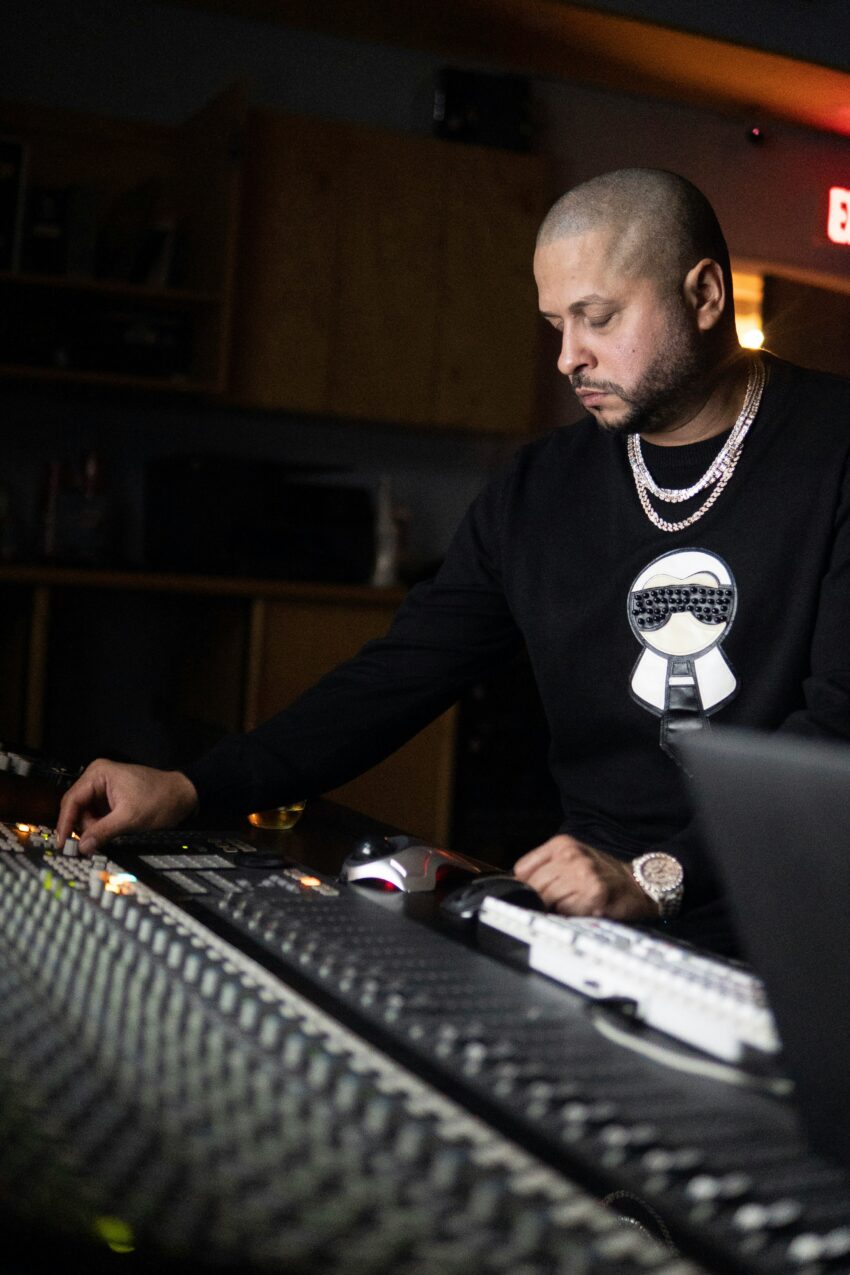
It used to be a once-in-a-while request. A producer in another city wanting to “hop on a Zoom” and listen as you push faders. Now it’s every other booking. Half your clients have heard about Audiomovers, Source Nexus, or SessionWire and they want in on the session.
On paper, this should be a good thing. Faster feedback. Fewer revision rounds. The client hears decisions in real time and signs off live. In practice, an attended remote mix session is a different job from a normal mix. It’s slower, more demanding, and structurally riskier. If you price it like a normal mix, you’ll lose money. If you scope it like a normal mix, you’ll lose hours. And if you don’t set the rules of engagement up front, you’ll spend the whole session trying to mix while a producer in another time zone fades up his own monitor mix and tells you the kick is “too kicky.”
This post is about how to run an attended remote mix session as a business decision, not a tech setup. The technical side (Audiomovers vs. Source Nexus vs. SessionWire, Muteomatic, virtual channels, Source Connect, all of it) is covered well elsewhere. What isn’t covered: how to price these sessions, how to scope them, how to handle the client behavior that breaks them, and when to push back on the request entirely.
Why an Attended Remote Mix Session Is a Different Product
Before deciding how to charge for it, it’s worth understanding why this work is structurally different from a normal mix.
A normal mix is async. The client sends stems. You mix in your own time, on your own monitoring, with full focus. You deliver. They give written feedback. You revise. Your hours are flexible, your concentration is your own, and your output is gated by the quality of your decisions, not by a clock.
An attended remote mix session compresses all of that into a live window. The client is on a Zoom call. They’re hearing your mix through a streaming plugin with a half-second delay. They’re talking. They have opinions in real time. You’re mixing while explaining what you’re doing, fielding questions, managing a talkback chain, watching for dropouts, and trying not to second-guess every move because someone is listening to you make them.
Three things change as a result. First, the session takes longer to do the same amount of work, sometimes two to three times longer than the equivalent async mix. Second, the cognitive load is higher because you’re operating in two modes simultaneously: mixing and presenting. Third, the technical surface area is bigger. You’re now responsible for your audio chain, the streaming chain, the call chain, and the client’s monitoring on the other end. Any of those can break, and when they do, you eat the time.
This is a different product. Price it like one.
How to Price an Attended Remote Mix Session
There are three workable pricing models. Each one solves the same problem differently.
The first is a flat per-session fee on top of your normal mix rate. This is the cleanest option. You charge your normal mix price, then add a separate fee for the attended portion, typically a half-day or full-day rate. A half-day rate of $300 to $600 and a full-day rate of $600 to $1,200 is in the right range for most mid-market mix engineers. Adjust based on your normal hourly rate. The math should be: normal mix rate × estimated extra hours × 1.5 to account for the cognitive premium. If a normal mix would take you 4 hours and the attended version takes 7, charge for the extra 3 hours at 1.5x your hourly rate.
The second is a higher hourly rate for attended work. If you normally bill at $75 per hour, attended sessions go in at $125 to $150 per hour with a minimum block (usually 3 or 4 hours). This works if your bookings are short and the client wants flexibility. It also forces clients to think twice about how long they actually need you live, which usually shortens the session.
The third is a tiered package: async-only, async with one attended review session at the end, or fully attended throughout. Most clients who think they want a fully attended session actually want option two. They want to be in the room for the moment of approval, not for every EQ tweak. Offering this tier gives you a way to give them what they actually want without committing to four hours of live mixing.
Whatever model you pick, put it in writing before the booking is confirmed. Build it into your mix engineer contract as a separate line item. The conversation about cost is much easier when it happens before the session, not after.
Scope the Session Before You Plug Anything In
Most attended remote mix sessions fall apart for the same reason: nobody agreed on what the session was actually for.
Run a 15-minute scoping call before the session itself. The questions to answer:
- What’s the goal of being live? Approving the mix? Giving directional feedback? Tracking changes in real time? Watching you work? The right answer is approval or directional feedback. The wrong answer is “I just want to be there.” If the client can’t articulate why they need to be live, push them toward an async-with-review structure instead.
- Who’s making the decision? If it’s the artist plus a manager plus a producer plus an A&R, you’re in trouble. Get the decision-maker named before the session. Anyone else attends as an observer with no veto power.
- What’s the agenda? Songs to cover, in order, with rough time per song. A two-hour session covering four songs needs a different pace than a two-hour session covering one. Get this agreed in writing.
- What’s out of scope? New parts. New references. Production-level changes. Comping. Editing. The session is a mix session. If they want to comp vocals on the call, that’s a different booking.
Send a short scoping email confirming all four. Cite it back if anything wanders during the session.
The Three Behaviors That Break Attended Sessions (And How to Handle Each)
Once the session is running, three client behaviors will reliably eat your time and your control. Knowing how to handle each in real time is the difference between a profitable session and a frustrating one.
The talker. This is the client who narrates everything. They comment over playback, they describe what they want while you’re trying to listen, they monologue about the song’s history. The fix is structural: build “listen passes” into the agenda. Tell the client up front, “We’re going to listen all the way through once, no comments, then go back and discuss.” Most talkers respect the structure once it’s set. If they don’t, mute their talkback during playback. Most engineers treat the mute button as awkward. It isn’t. It’s part of the workflow.
The driver. This is the client who tries to mix the session themselves. They keep asking you to “try” things. Boost this. Pull that down. Try the other reverb. Each request individually is small. Together they hijack the session. The fix is to time-box experimentation. “I’ll spend 5 minutes on that, and if it doesn’t land, we move on.” Then enforce the clock. You’re the engineer. You set the tempo.
The disconnector. This is the client whose internet keeps dropping, whose audio cuts out, whose monitoring is on laptop speakers, who is hearing your mix through their phone in their car. Whatever you mix, they can’t really hear. The fix here is on the front end: tell them in the scoping email that they need a stable connection and proper monitoring (headphones at minimum). If they show up to the session unable to hear properly, end the session and reschedule. Mixing for someone who can’t hear the mix is unbillable work.
What to Send Beforehand
Most attended session friction is solvable with three pre-session sends, all done at least 24 hours in advance.
The first is a rough mix. Yes, even though they’re attending. Send a stable rough mix the day before so the client arrives knowing what the song sounds like. Sessions where the client is hearing the song for the first time during the attended pass are the worst sessions. They spend the first hour reacting to the song instead of giving you mix-level feedback.
The second is a tech check link. Send them whatever streaming plugin you’re using (Audiomovers Listen, Source Nexus, SessionWire) with a one-paragraph instruction set: open this link in Chrome, plug in headphones, click play, confirm you can hear the test track. If they can’t get it working before the session, you fix it before the session, not on the call.
The third is the agenda. Send the scoping email summary back to them as the agenda for the session. Songs in order, time per song, decision-maker named, what’s in scope. Two reasons: they show up oriented, and you have a written reference to point to when something tries to drift mid-session.
For the file delivery side around the session, a clean upload link via session.trackbloom.com keeps the rough mix, reference tracks, and post-session files organized in one place instead of scattered across email and Dropbox.
When to Decline an Attended Remote Mix Session
Not every attended session request is worth taking. Three situations where the right answer is no, or “let’s do this differently.”
The client can’t articulate why they need to be live. If you ask “what do you need this session to accomplish?” and they say “I just want to watch,” that’s a red flag. Watching you mix is a learning request, not a client request. Decline the attended version, deliver async, and offer a 30-minute review call afterward.
The decision-making isn’t clear. If the artist, the manager, and the producer all want to be on the call and none of them is the explicit decision-maker, the session will be a referendum, not a mix. You’ll come out with conflicting notes and a longer revision queue than if you’d just delivered async. Push for the decision-maker to be named or decline the live format.
The technical baseline isn’t there. If the client is calling in from a hotel room on hotel wifi, mixing live is a waste of everyone’s time. Reschedule for when they’re on a stable connection in a real listening environment, or do it async.
Saying no to a bad attended session protects the next attended session you say yes to. Each one that goes well builds the case for charging more for the next one. Each one that goes badly trains your clients to expect a service you can’t deliver profitably.
The Format Is a Premium Service. Treat It Like One.
The mix engineers who make attended remote mix sessions work treat them as a premium product, not a default service. They charge separately for the attended time. They scope the session before plugging anything in. They send the rough, the tech check, and the agenda 24 hours ahead. They run the session like a producer running a tracking date, with structure and tempo. And they decline the bookings that won’t work.
The format is here to stay. Clients will keep asking for it because the tools keep getting better and the expectation of being in the room (virtually) keeps growing. The engineers who figure out how to run these sessions profitably will charge premium rates for them. The engineers who run them like normal mixes with extra friction will burn out and start refusing the request entirely.
The middle path is the one most engineers default to: take the request, charge a normal rate, run it without structure, and absorb the cost in lost hours and frustration. It’s also the worst path. It trains your clients to expect a service you’re not actually providing, and it teaches you to dread the format. Pick one of the other two. Either run attended sessions properly and charge for them, or politely decline and offer the async-with-review tier instead.
You’re the one running the session. The fact that the client is watching doesn’t change that.